

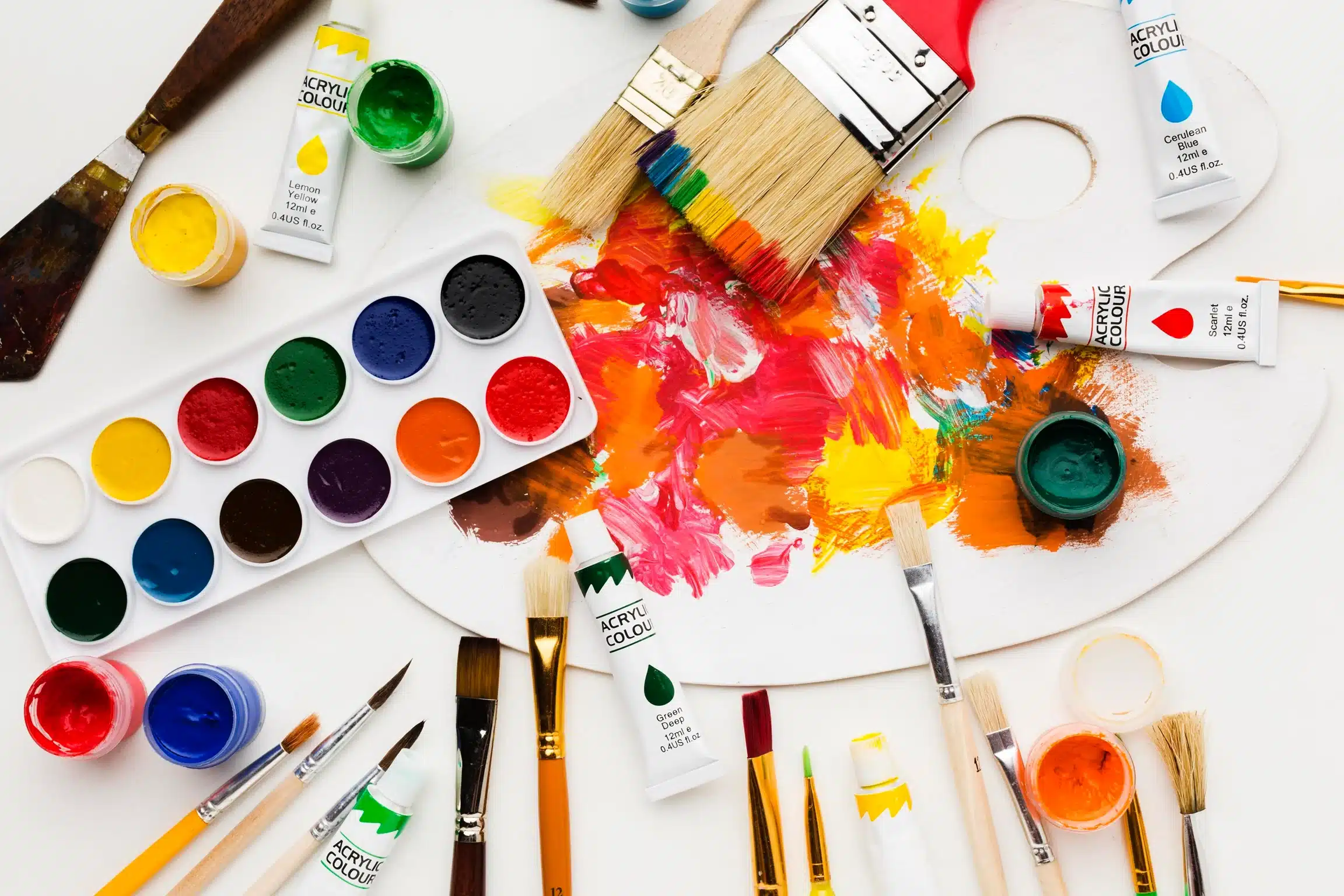
Sometimes, I think painting is just about the brushstrokes and colors. But it’s more than that. The real magic happens when you choose the right type of paint for art. Whether it’s acrylic, oil, or watercolor paint, each one brings something different to the canvas. The paint type you pick affects the texture, drying time, and the overall feel of your work. It’s not just about painting; it’s about making the right choices to bring your vision to life. Interested? Let’s talk about it in detail.
Why the Type of Paint Matters
Choosing the paint isn’t just about picking a pretty color. The types of paint you use affect how the final artwork looks, feels, and even how long it lasts. A painting done in one medium can feel totally different in another. Some paint types let you layer colors quickly, some blend smoothly and slowly, some shine, and some are soft and dreamy.
Also, paint behaves differently depending on what you paint on (paper, canvas, or wood), how you layer it, and whether you want bold strokes or soft fades. So knowing your different kinds of paint for art helps you make better art.
Main Types of Paint for Art
Let’s talk about the different paint types for art. Each one has its own unique characteristics and will help you create different effects on your canvas or paper. Here’s the rundown of some of the most common types of paint for art.
Acrylic Paint
Credit: artsupplies.co.uk
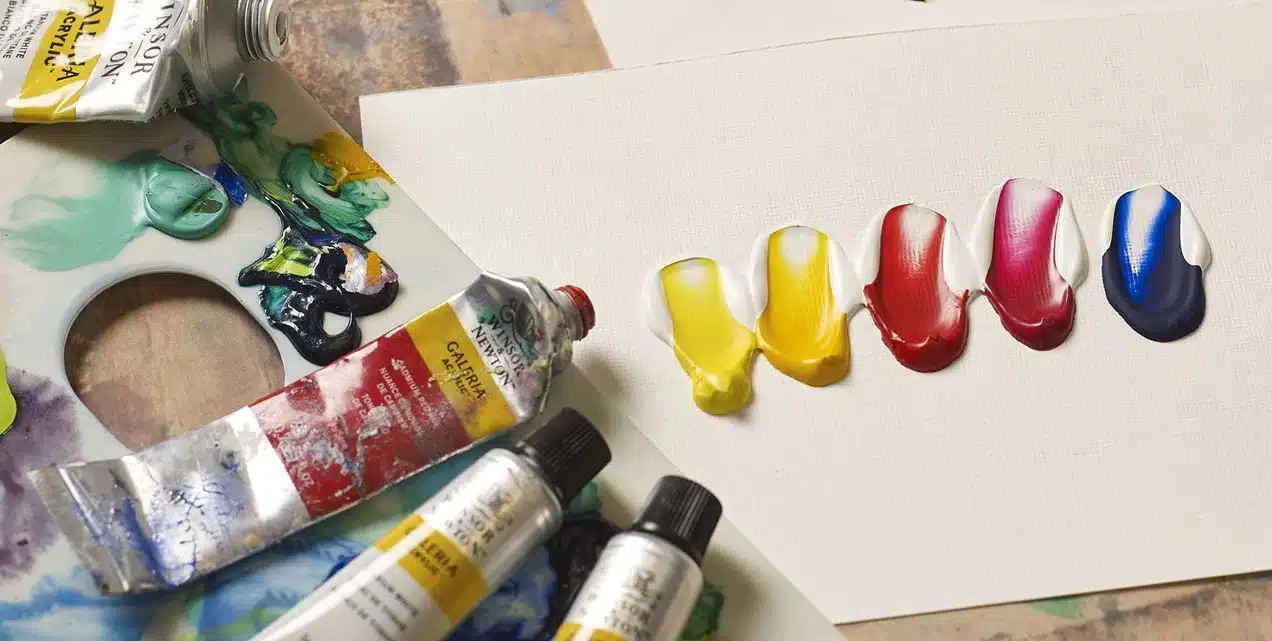
I think every one of us knows about acrylic paint. It is one of the most popular choices for many artists because of its versatility and quick-drying nature. Whether you want to create bold, expressive pieces or need something that dries fast for layering, acrylic paint gives you a lot of flexibility.
- What it is: Acrylic paint is water-based and uses a synthetic binder. It’s flexible: you can thin it with water or make it thick and creamy.
- Drying time & texture: Acrylic paint dries fast, often within minutes or a few hours, to a water-resistant finish.
- Why you might like it: It’s versatile. Works on lots of surfaces (canvas, wood, paper, even some plastics). You can layer lots of colors, mix different textures, or even mimic other types of paint for art, like watercolor or oil paint.
- Downsides: Once it dries, it becomes permanent — you can’t reactivate it with water. And cleanup is easiest while it’s still wet.
When to use it: Great for beginners or anyone who wants colors fast and bright — ideal for bold, expressive pieces, mixed media, or working on non-traditional surfaces.
Oil Paint
Credit: opusartsupplies.com
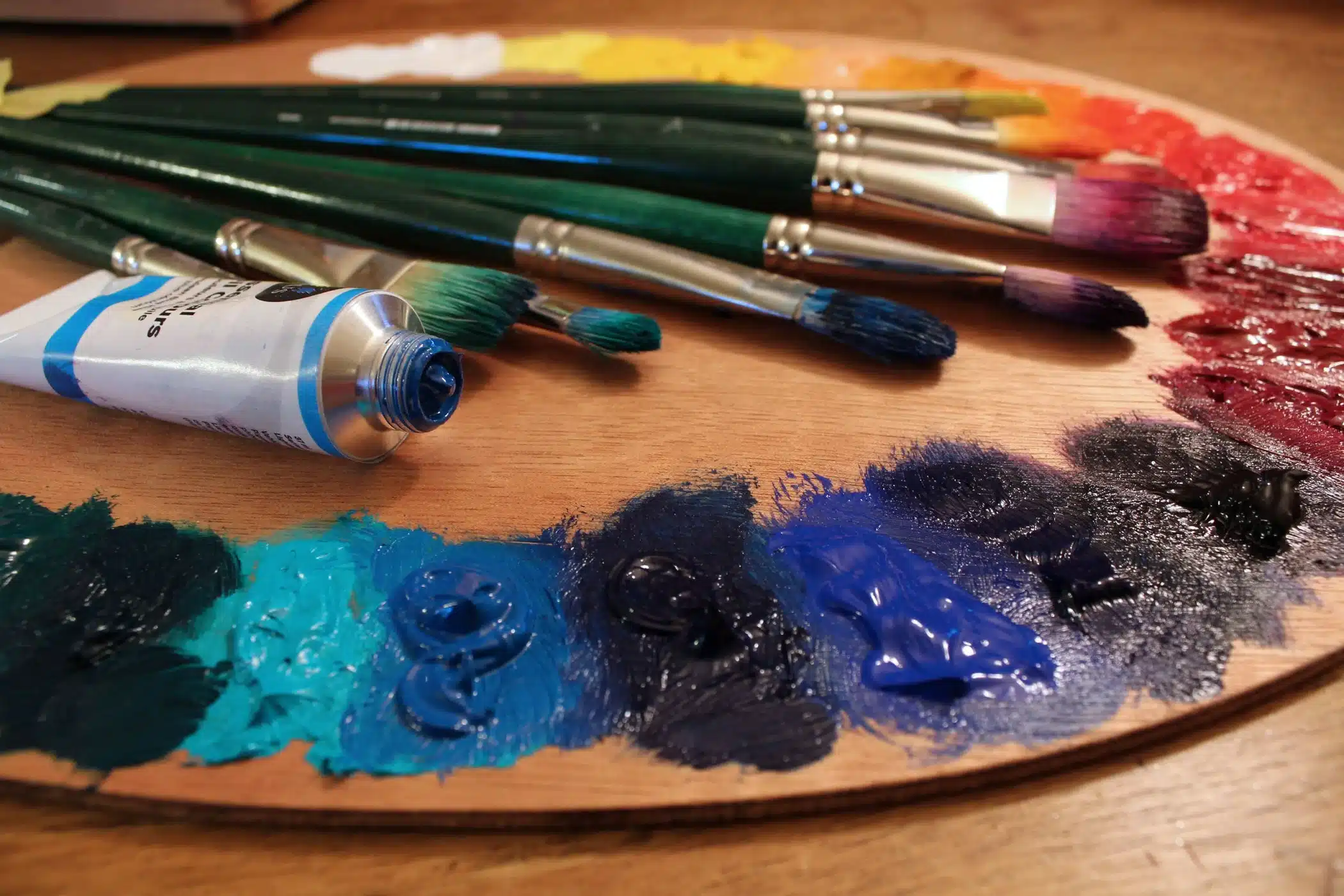
Next comes oil paint for art. So, it has been around for centuries, loved by artists for its rich texture and ability to blend smoothly. It’s perfect for artists who want to take their time and build up their pieces slowly.
- What it is: Pigments mixed with oils (often linseed oil). This gives a thick, buttery texture that artists have used for centuries.
- Drying time & flexibility: Oil paint dries slowly. That’s good: you get time to blend, adjust, and refine for days or even weeks.
- Why you might like it: The slowdown gives you room for subtle blending, rich colors, and smooth gradients — perfect for depth, realism, portraits, and landscapes.
- Downsides: Requires solvents or mediums for thinning and cleanup. Not ideal for quick sessions, and extra care is needed (ventilation, drying time).
When to use it: When you want rich textures, slow-built depth, and detailed work; it’s ideal if you’re patient and aiming for something more “classic.”
Watercolor Paint
Credit: shuttleart.com
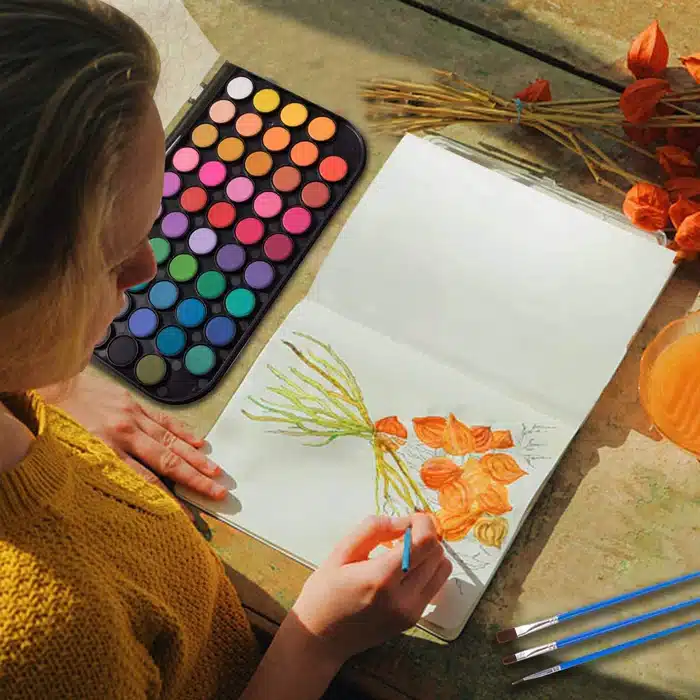
Well, as the name implies, watercolor paint is known for its transparency and delicate, dreamy feel. It’s perfect if you want to create light, airy layers of color that flow and blend beautifully.
- What it is: Water-based pigments suspended in a water-soluble binder (often gum arabic).
- Appearance & mood: Transparent, soft, and ethereal. Watercolor paint works best for airy washes, light layers, subtle gradients, and dreamy effects.
- Drying & cleanup: Dries quickly and cleans up easily with water.
- Challenges: Because it’s transparent and delicate, mistakes are harder to fix. Also generally requires special watercolor paper for the best results.
When to use it: Great for light, spontaneous work — nature scenes, portraits, loose illustrations, soft backgrounds, and delicate art.
Gouache
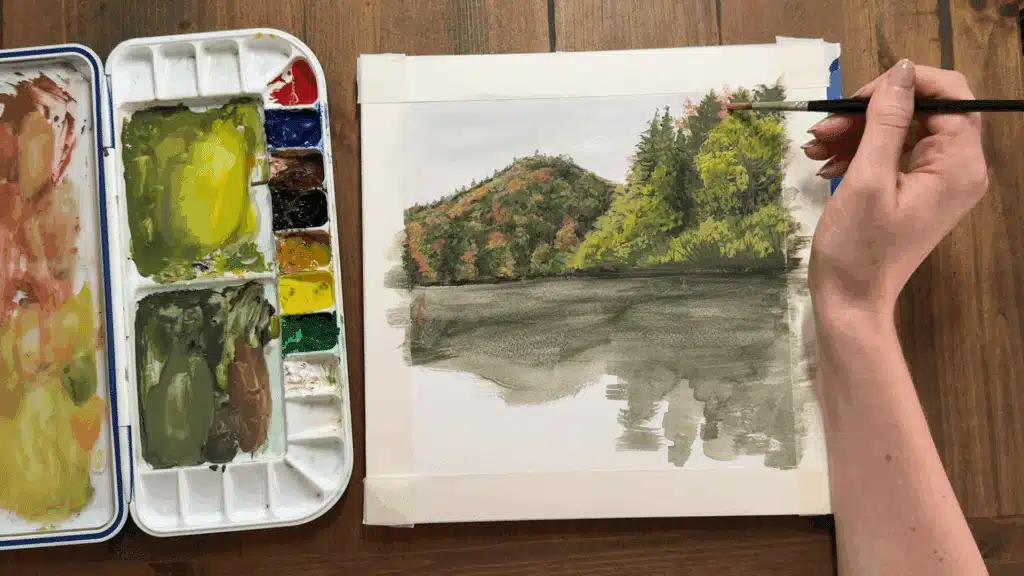
Credit: finearttutorials.com
Very unique and opaque, gouache paint is the best of both worlds. It’s more versatile than watercolor and still has that smooth, clean finish. If you want something with more boldness but still want that fluid, smooth look, gouache is perfect.
- What it is: Gouache is water-based like watercolor but opaque. You get pigment and binder, often chalk or opaque white, added for fullness.
- Texture & flexibility: It feels creamy, and you can water it down for watercolor-like effects or use it thickly for bold, opaque strokes.
- Advantages: You can re-wet and rework layers because it remains water-soluble even when dry. That makes it forgiving compared to watercolor.
- Things to watch out for: Colors may darken a bit as they dry. Gouache sometimes is less lightfast than acrylic or oil, so framing under glass or protecting from moisture/light helps.
When to use it: Perfect for illustrative work, graphic styles, comics, and storybook art — anytime you want bold, opaque color but still easy cleanup and control.
Other Paints (Less Common — but Worth a Peek)
Sometimes artists like to experiment with more niche types of paint that give unique effects. If you’re feeling adventurous, these could offer something different for your projects.
- Encaustic Paint: A wax-based paint that’s heated before applying. It gives a unique texture and finish and is known to be durable. Works especially well on wood or rigid surfaces.
- Tempera Paint: Traditionally bound with things like egg, nowadays often water-based and simple. It’s fairly easy to use and good for projects that don’t need luxury finishes.
- There are other media too: inks, wash pigments, and mixed media paints — all with their own quirks.
These different kinds of paint for art may not be as common, but they offer cool, distinct effects you might love if you’re experimenting or going for something unique.
How to Pick the Right Paint for You
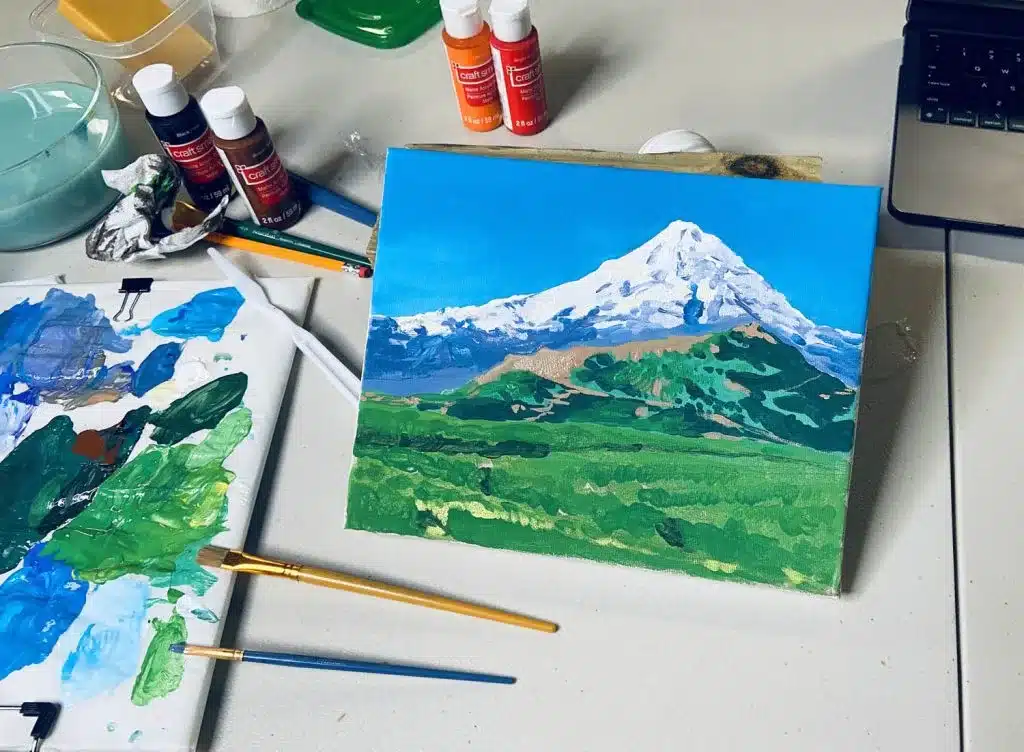
Credit: gvaat.com
Here’s a simple breakdown to guide you:
- Your mood & speed: Want quick results? Go for acrylic paint, gouache, tempera, or watercolor paint. Have time and want to build slowly? Oil paint or encaustic might be your jam.
- Your surface: Canvas? Acrylic paint or oil paint. Paper? Watercolor paint, gouache, tempera. Wood or board? Encaustic or acrylic paint.
- Your technique: Want fluid, transparent layers? Watercolor paint. Bold solid shapes? Gouache or tempera. Blended realism? Oil paint. Mixed media textures? Acrylic paint (or encaustic if you’re adventurous).
- Your patience & safety: Oil paint needs time, ventilation, and cleanup care. Water-based paints tend to be easier, faster, and cleaner.
- Your end goal: Quick sketches, lightweight art, fun personal projects → watercolor paint, gouache, acrylic paint. Serious pieces, portraits, deep layering, fine art → oil paint, encaustic.
You don’t have to stick to just one. Many artists mix media and styles depending on the mood, project, or effect they want.
The cool part? Almost no choice is “wrong.” It’s more about what feels right for you, your mood, your vision, and your project. Try different ones. Mix them. Play, experiment, make mistakes. You’ll find your favorite in time.
The Last Stroke
I think we have learned so far that art is all about expression. And picking your paint is part of that expression. The types of paint for art you choose shape not just the look of your artwork but also what you feel while creating it.
Frequently Asked Questions
Which paint is best for beginners?
Acrylic paint or watercolor paint; both are easy to use, clean up with water, and don’t require extra materials like solvents.
Can I switch between paints in one artwork?
Yes! Many artists blend styles. For example, use watercolor paint for backgrounds, then add details with acrylic paint or gouache.
Which paint lasts the longest?
Oil paint and encaustic tend to be very durable (when used and maintained properly). Acrylic paint also lasts long and is water-resistant.
Are some paints safer or less messy for kids?
Yes. Water-based paints (like watercolor paint, gouache, and tempera) are usually safer and easier to clean — great for kids or casual art.
Do I need special paper or canvas for different paints?
Often, yes. Watercolor paint and gouache work best on watercolor paper. Oils and acrylic paint usually go on canvas or primed boards. Encaustic may need sturdy surfaces like wood.
